

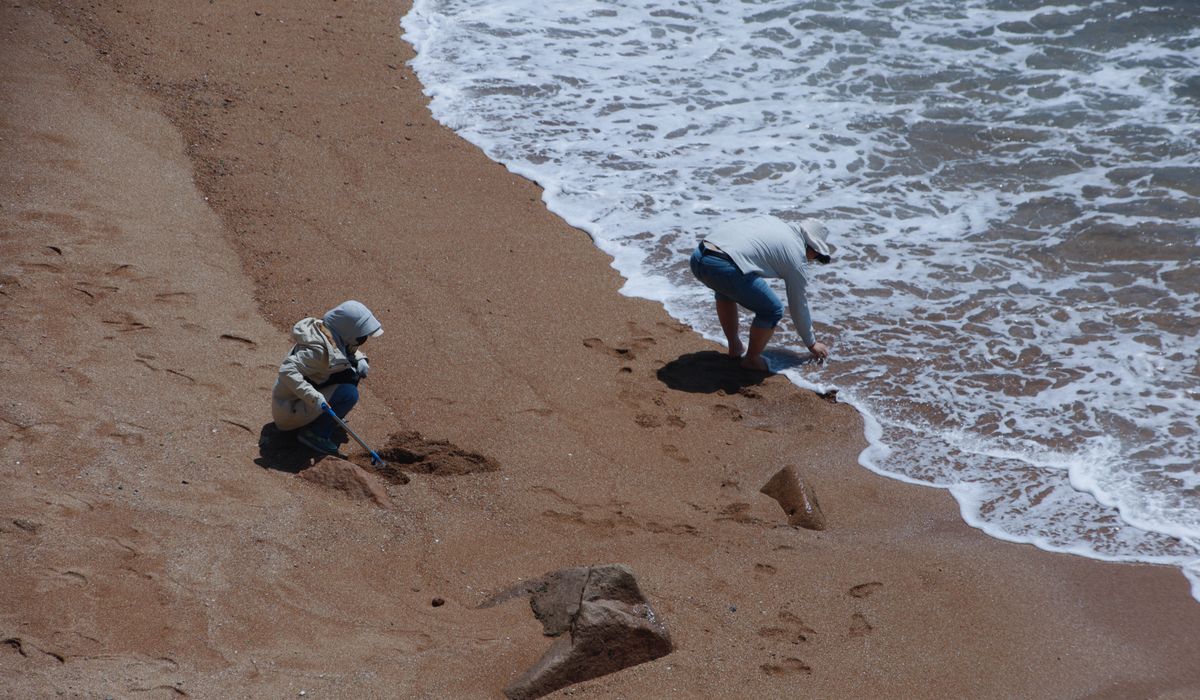
Reading the Beach After a Storm
There is no better time to head for the coast than the hours after a heavy gale. Storms churn the seabed, stripping sand from known beaches and depositing fresh material along the strandline. For beachcombers, this is the golden window. Sea glass and pottery that has lain buried for decades can be uncovered in a single tide.
Arrive as the tide begins to ebb, and walk the high-water mark first. That dark ribbon of seaweed, twigs and debris is where the heaviest pieces drop. Then work your way down to the low-water mark as the sea retreats. Look for shingle banks, gravel patches between rocks, and the edges of rock pools where swirling water deposits small, dense items. A north-easterly gale on an east-facing beach often brings the best results, while south-westerly storms shift material onto western shores. Check local tide tables and always give yourself an hour either side of low water.
- Storm beaches: steep banks of pebbles at the top of the beach often hide fresh glass.
- Gravel patches: small stones trap frosted shards that would otherwise roll away.
- Rock pools: check the shallow edges, not just the bottom, for pottery and glass.
- Harbour walls: old slipways and seawalls are hotspots after winter swell.
Recognising Frosted Glass and Sea Pottery
Genuine sea glass has a smooth, frosted surface like sugar icing. The edges are rounded, never sharp, and the colour is muted by years of tumbling. Hold a piece up to the light: common colours are white, green and brown, but rarer finds include cobalt blue, aqua, amber and even red or deep purple. The frosting is not a coating; it is a physical change to the glass surface caused by salt, sand and wave action. If a piece looks glossy or has sharp edges, it has not been in the sea long enough.
Sea pottery is usually more subtle. Look for curved shards with a matte, worn surface. Patterns can survive for a century or more: blue and white willow patterns, sponged ware, transfer-printed florals, and simple banded rims from Victorian kitchenware. The edges should feel soft, almost like a worn pebble. A piece of modern china will have a bright, clean break; old sea pottery has a softened, sometimes pitted edge. Do not dismiss plain white shards — they may be the remains of a 19th-century clay pipe or a piece of creamware.
- Frosting test: if it sparkles like new, leave it; it is not ready.
- Colour clues: cobalt and red are rare because they were used sparingly.
- Pottery patterns: blue transfer-print is common; multi-coloured spongeware is a treat.
- Shape: look for the curve of a bowl or the flat base of a plate.
Tools, Safety and the Right Conditions
You need very little: a sturdy bag or bucket, a small trowel for prising finds from shingle, and gloves to protect against sharp shells and broken glass. Wear wellies or sturdy shoes with grip. Never turn your back on the sea, and be aware of slipping on wet rocks or being cut off by a fast-moving tide. In winter, dress for wind and rain; in summer, take water and sun cream. A walking pole can help you test uncertain ground.
Go gently. Raking or digging deep into the beach damages the very habitat that produces sea glass. Take only what you can carry, and leave the rest for others. If you find a large cache, take a few pieces and rebury the rest above the tide line. Avoid disturbing nesting birds on shingle beaches between March and September.
The Law and Ethics of Removing Finds
This is the part many beachcombers overlook. In the UK, removing historical artefacts from certain sites can be illegal. The Treasure Act 1996 covers items of gold or silver, prehistoric base metal, and groups of coins over 300 years old. If you find something that might be treasure, you must report it to the local coroner within 14 days. Sea glass and common pottery are not treasure, but pottery from a protected wreck or a scheduled monument is a different matter. The Protection of Wrecks Act 1973 designates wreck sites; removing anything from them without a licence is a criminal offence. The Ancient Monuments and Archaeological Areas Act 1979 protects scheduled monuments, including some coastal sites.
Even where the law is quiet, ethics matter. A shard of Victorian willow pattern is one thing; a piece of Roman Samian ware or a medieval pilgrim badge is quite another. If you suspect a find is historically significant, photograph it in situ, note the location, and report it to the Portable Antiquities Scheme or your local museum. Never dig into a wreck site or a known archaeological layer. Many beaches are also nature reserves or Sites of Special Scientific Interest, where bye-laws may prohibit removing any material at all. Check local notices before you set out.
Cleaning, Sorting and Displaying Your Finds
Once home, rinse your finds in fresh water to remove salt. Do not use harsh chemicals or a scrubbing brush on frosted glass; you will destroy the very surface that makes it special. A soft toothbrush and a little warm soapy water are enough for pottery. Allow everything to dry naturally.
Sort by colour and size in clear jars or shallow trays. Sea glass looks beautiful in a glass bowl on a windowsill, where light brings out its colours. Pottery shards can be arranged in a frame or a shadow box, grouped by pattern. Label any unusual pieces with the beach and date, and keep a simple notebook of where you found them. That record turns a pleasant hobby into a genuine study of your local coastline.


Coding is used in almost all aspects of life and work now, be it directly or indirectly. It’s not just for companies in the tech sector. “An increasing number of businesses rely on computer code,
Coding is used in almost all aspects of life and work now, be it directly or indirectly. It’s not just for companies in the tech sector. “An increasing number of businesses rely on computer code,
Coding is used in almost all aspects of life and work now, be it directly or indirectly. It’s not just for companies in the tech sector. “An increasing number of businesses rely on computer code,